In a world driven by economic uncertainty, skyrocketing debt, and a rapidly evolving digital economy, financial literacy is no longer optional—it is essential. Yet, millions of young people across the United States, India, and Latin America are growing up without the basic knowledge of how money works.
This is not just an oversight. It’s a global epidemic of financial illiteracy—one that affects everything from mental health to social mobility and economic resilience. To change the trajectory, we must start teaching kids about money as early as age three and sustain that education through college. Enter Flow Impact’s “FlowU”, a game-changing financial education program for youth launching in 2026 that seeks to do just that.
What is Financial Illiteracy? And Why Is It So Dangerous?
Financial illiteracy is the inability to understand key financial concepts like budgeting, saving, credit, investing, and debt management. In the United States, two-thirds of adults fail basic personal finance literacy tests. The National Financial Educators Council estimates that financial ignorance cost Americans more than $400 billion in 2023.
In India, where nearly half the population is under 25, fewer than 27% of adults are considered financially literate. Across Latin America, countries like Mexico, Brazil, and Argentina fare just as poorly, with youth financial literacy rates hovering below 35%. Without access to early financial education, young people in these regions are especially vulnerable to poverty cycles, bad debt, and poor money habits.
The Root of the Problem: No Financial Education in Schools
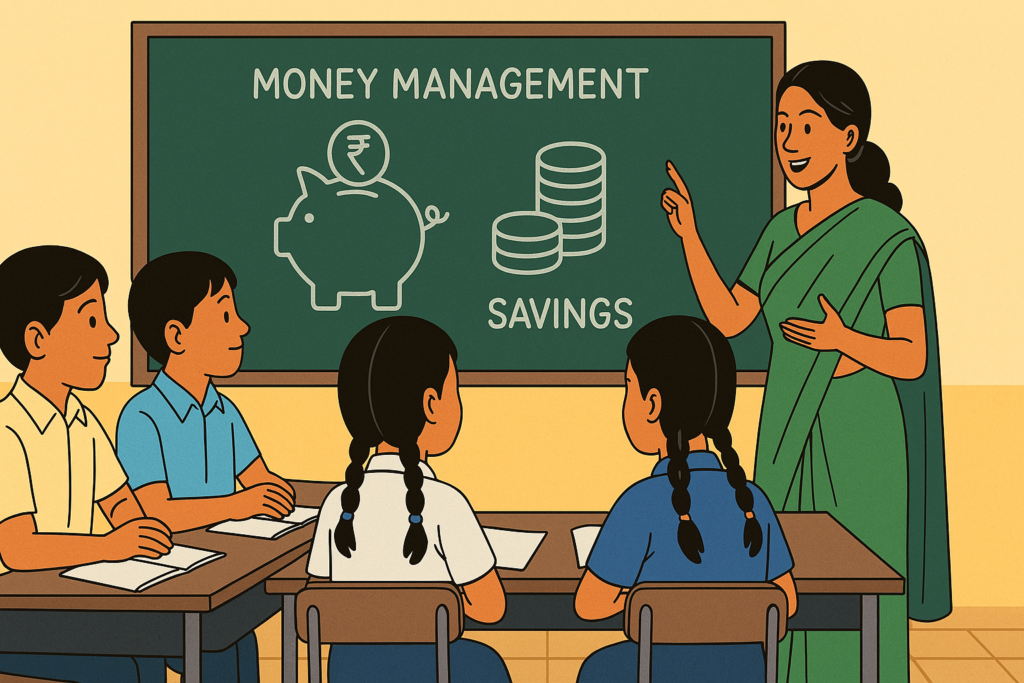
In most public education systems, financial literacy in schools is barely addressed. In the U.S., only 23 states require high school students to complete a personal finance course. In India and many Latin American countries, financial education is almost entirely missing from the curriculum.
By contrast, countries like Finland and Australia integrate financial education for kids into primary and secondary school. These nations report higher rates of saving, lower consumer debt, and stronger household economic planning.
Failure to include money management in early education not only limits children’s future success—it also widens economic inequality and perpetuates generational poverty.
Why We Must Start Teaching Financial Literacy at Age 3
Numerous studies—including research from Cambridge University—show that children form financial habits as early as age seven. This means by the time most financial education programs start in middle or high school, critical learning windows have already closed.
Starting early provides children with the cognitive and emotional skills they need to make healthy financial choices. Early childhood financial education doesn’t involve complex math or investing—it involves learning patience, goal-setting, delayed gratification, and the difference between needs and wants.
By incorporating play-based learning and storytelling, even toddlers can grasp foundational money concepts that shape their futures.
Introducing FlowU: A Global Solution to Financial Illiteracy
To address this crisis, Flow Impact, a U.S.-based nonprofit, is launching FlowU—a digital, enterprise-grade financial literacy education platform—in 2026. This global initiative aims to eradicate financial illiteracy by providing an interactive, self-paced curriculum for children and young adults aged 3 to 22.
FlowU’s financial literacy program is age-appropriate, culturally relevant, and grounded in global best practices.
👶 Ages 3–6: Preschool Financial Literacy
- Introduction to local currencies and basic money concepts
- Development of life skills like patience, sharing, and saving
- Use of gamified learning and role-playing to reinforce smart money habits
🧒 Ages 7–11: Elementary School Money Education
- Budgeting, saving, and entrepreneurship for kids
- Creation of “Kids’ Money Clubs” for peer-led learning
- Integration of community projects and basic financial planning
👩🎓 Ages 12–22: Teen and College-Age Financial Empowerment
- Deep dives into digital finance, budgeting, credit, and online safety
- Simulated real-world experiences for youth entrepreneurship
- Lessons on mental health, sustainability, and workforce readiness
FlowU is more than an app or a classroom tool—it’s a digital financial education ecosystem designed to empower an entire generation.
The Benefits: Why Financial Education Changes Lives
Financially literate youth are more likely to:
- Save regularly and invest wisely
- Make informed decisions about college, careers, and credit
- Avoid high-interest loans, fraud, and financial scams
- Launch their own businesses and contribute to local economies
They also experience less financial anxiety and are more likely to report higher life satisfaction and better mental health. For low-income youth, these skills can be a lifeline out of poverty.
In countries with high unemployment and limited access to capital—like many parts of India and Latin America—programs like FlowU financial education could have a massive impact on community wealth and social mobility.
What Needs to Happen Next: A Global Financial Literacy Movement
To truly tackle the financial literacy crisis, governments, school systems, and the private sector must:
- Mandate personal finance education across all grade levels
- Fund teacher training and curriculum development
- Provide access to digital financial education tools for rural and underserved communities
- Partner with nonprofits like Flow Impact to ensure curriculum is inclusive, equitable, and evidence-based
Financial literacy is economic infrastructure. Teaching money skills to youth is just as important as teaching math, reading, and science. It prepares students not just for school—but for life.
FlowU’s Call to Action
FlowU invites schools, philanthropists, tech innovators, and socially responsible companies to become part of the solution:
- Sponsor curriculum modules and localized (Country or Global) versions
- Fund student access licenses in under-resourced areas
- Underwrite research on long-term economic outcomes
Together, we can build a world where every child—regardless of income or geography—has access to the tools they need to thrive financially.
Final Thoughts: Money Lessons Start at Home, But Must Be Reinforced at School
Parents and caregivers play an essential role in teaching kids about money. But we can’t expect families alone to carry the burden of financial education, especially in households where financial literacy may not exist.
We must institutionalize personal finance education for youth as a universal right—starting with early childhood education, continuing through high school, and supported by innovative tools like FlowU.
Let’s create a future where kids don’t just learn to count coins—they learn to build wealth, resilience, and a better world.
If you are a Company wanting to help, Click here.
To Donate, Click here: